GPR Concrete Scanning
Drilling into a post-tensioned slab without knowing where the tendons are is how a routine anchor install becomes an engineering problem. Ground penetrating radar shows what is inside the concrete before anyone cuts it.
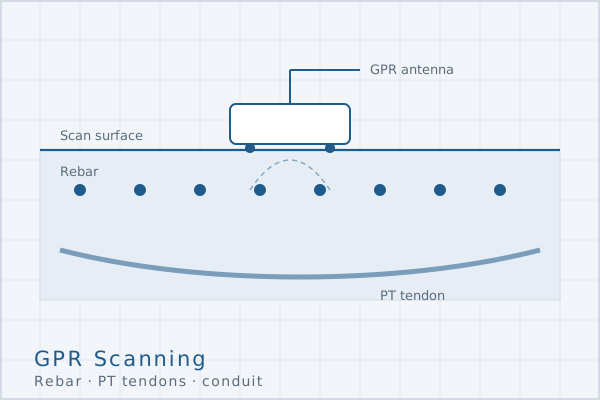
What we locate
We scan existing and new concrete ahead of coring, saw cutting, trenching and post-installed anchors, and mark what we find directly on the surface so the crew drilling the hole can see it.
- Reinforcing steel — location, spacing and approximate cover
- Post-tension tendons in elevated slabs and on grade, including tendon profile
- Electrical conduit and other embedded utilities
- Clear zones for core holes, saw cuts and anchor locations
- Approximate slab thickness
- Possible voids and areas of poor consolidation, flagged for follow-up
How a scan works
We scan the area in a grid, interpret the readings on site, and lay out what we find on the concrete with paint or marker. Locations that matter to the work — a tendon near a planned core, a conduit run through a cut line — are called out to the crew before we leave.
- Scope confirmed with you before mobilizing: areas, hole or cut locations, and access
- Surface mark-out of reinforcement, tendons and conduit
- Photo log of each marked area
- Written report with locations, estimated depths and any limitations encountered
What GPR cannot do
GPR is the right tool for most concrete scanning, but it has limits, and we put them on the report rather than leave them out. Depth readings are estimates based on the signal speed in that concrete. A dense top mat of rebar can hide what sits below it. Concrete that is still curing or very wet reduces how deep the signal reaches. Where a cut or core is high-risk — for example close to a PT tendon — we say so and recommend how to verify before proceeding.
Who performs the scan
Scanning is performed by BK personnel or by a qualified scanning partner, depending on the scope and schedule. Either way, BK scopes the work, coordinates the visit, and delivers one report.
Common questions
Can GPR find post-tension tendons?
Usually, yes. Tendons generally show up clearly on GPR, and their profile helps tell them apart from rebar. Where reinforcement is congested or a tendon sits below a dense mat, the reading is less certain, and we mark those areas as such rather than guess.
How accurate are the depths?
Depth is an estimate based on the signal speed in the concrete being scanned. Where we can, we calibrate against a known depth, such as an existing core or a measured edge, and the report states depths as approximate.
Method and deliverables
| Method | Ground penetrating radar (GPR) |
|---|---|
| Referenced guidance | ACI 228.2R; ASTM D6432 |
| Typical uses | Coring, saw cutting, post-installed anchors, slab openings, tenant improvements |
| Deliverables | Surface mark-out, photo log, written scan report |
Need an inspector on site this week?
Send the plan set, the statement of special inspections, and the jurisdiction. We will come back with scope and pricing — not a form to fill out.